I’ve written before about Terezin, or Theresienstadt, the concentration camp ghetto near Prague where Czech Jews – including the cream of Jewish and Czech cultural life – were incarcerated by the Nazis before being transported to Auschwitz and death. Two years ago the BBC broadcast a day of music of Terezin from the Barbican. Fifteen years ago, Anne Sofie von Otter, who recorded a CD of songs from Terezin, performed them at the Royal Festival Hall. I was privileged to be at both.
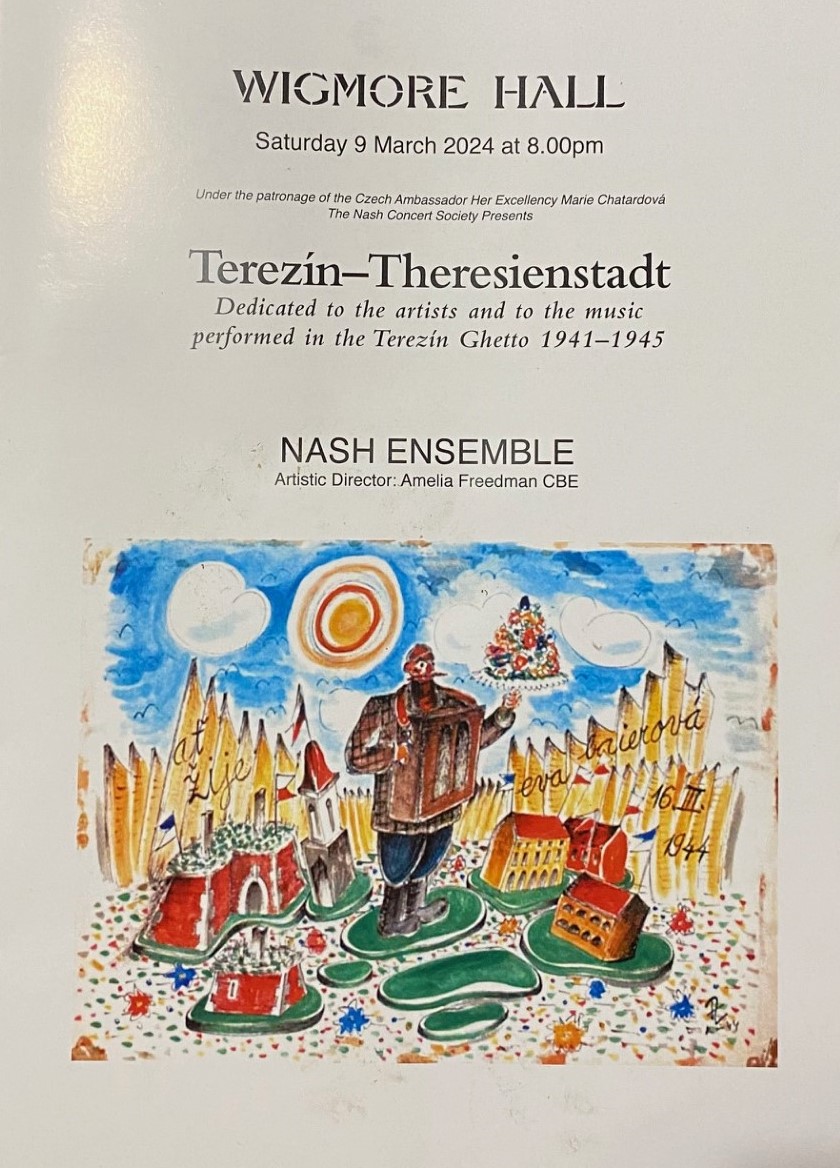
Last weekend, at Wigmore Hall in London, another Terezin Day, with performances by the Nash Ensemble, focussed on the chamber music of some of the very, very fine composers who were incarcerated there. But first, as at the Barbican two years ago, came a showing of Simon Broughton’s exquisite film, The Music Of Terezin, commissioned by the BBC in 1993 and which he presented (would it be commissioned today? He posed the question. I suspect we know the answer – and I write as a huge fan of the BBC).
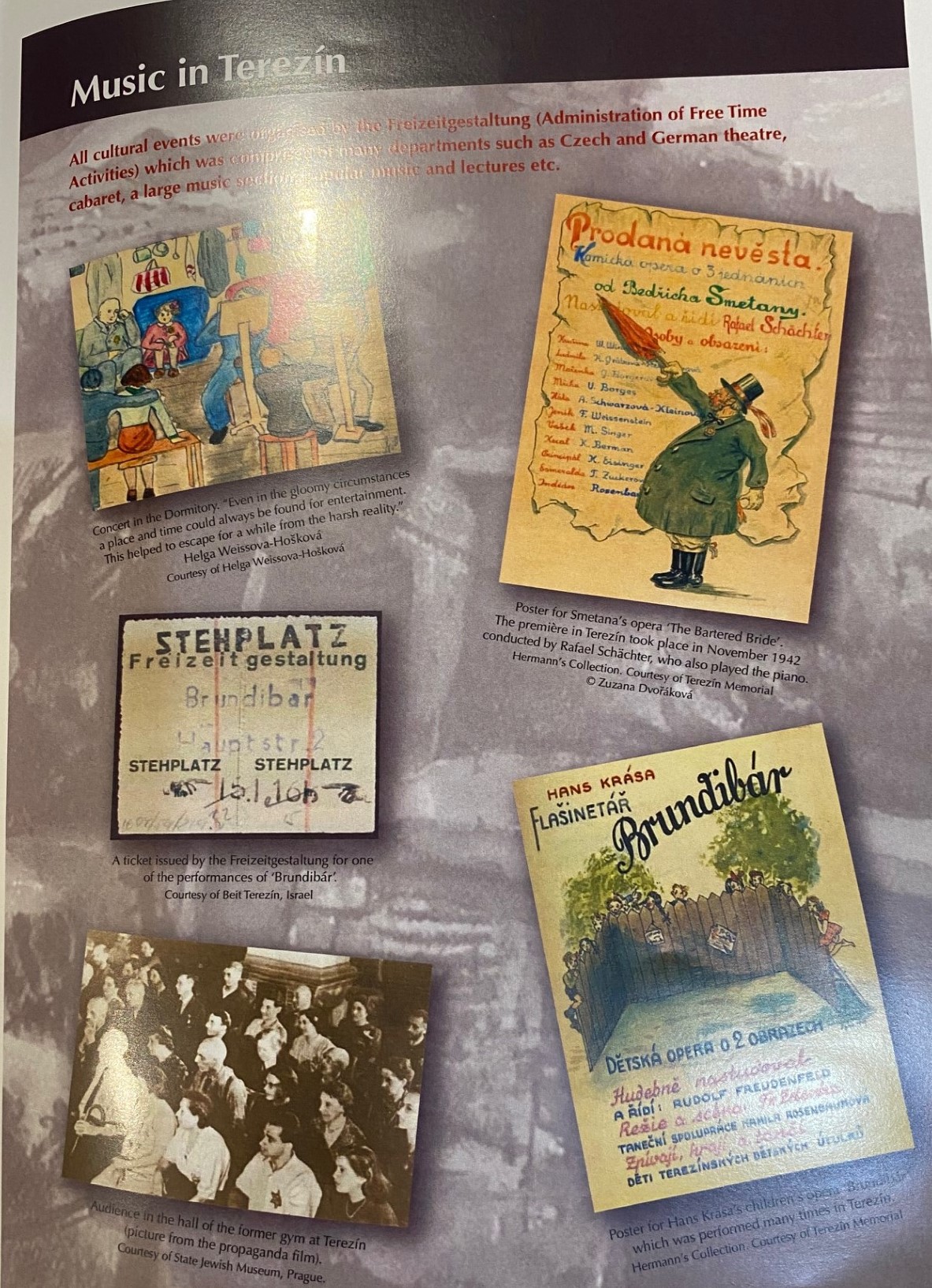
The film records – with interviews from survivors of the place – how people in the ghetto recreated as best they could the cultural life they knew, and which made existence worthwhile: theatre performances, literary readings – and music. Operas, orchestral concerts and chamber music were not only part of the everyday life of the ghetto, but a central part of it. Leading composers – Hans Krasa, Pavel Haas, Victor Ullman and Gideon Klein were all confined there and carried on writing music and seeing it performed.

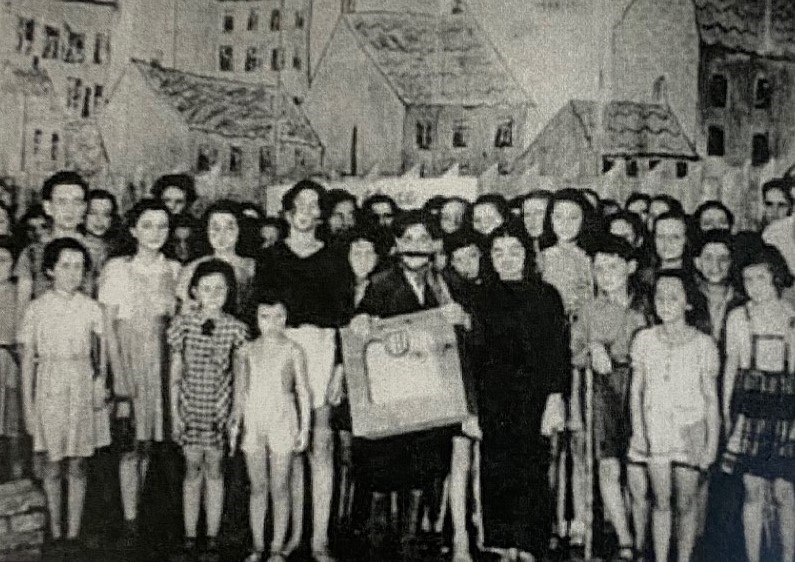

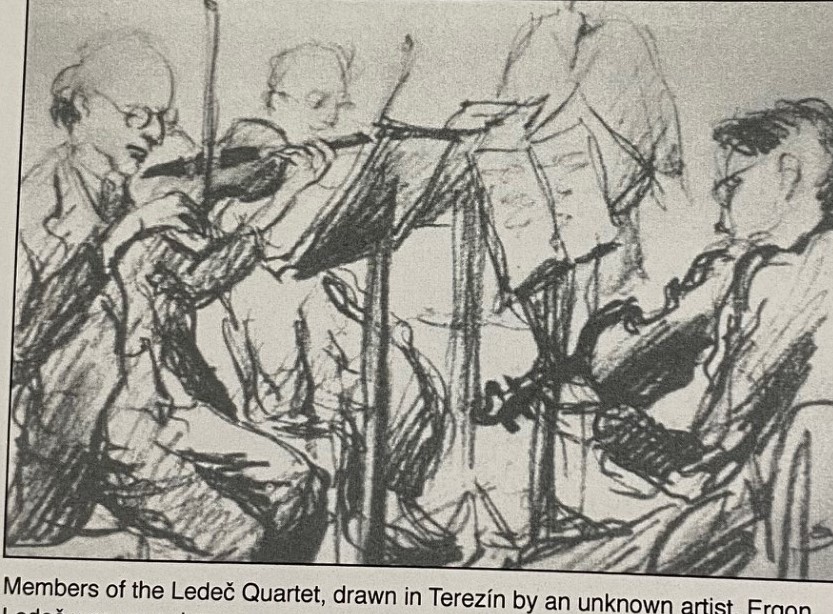
A view of Terezin by Fritta (Fritz Taussig); the Terezin childrens chorus of Hans Krasa’s opera, Brundibar, many of whom were transported to Auschwitz; and a sketch of the Ledec Quartet, drawn in Terezin by an unknown artist.
As with all events like this, the film is both deeply upsetting and profoundly uplifting. On the one hand: learning that Gideon Klein’s string trio was written because the fourth member of the ghetto string quartet for whom it was intended and which performed his work had just been put on a transport to Auschwitz; or that the day after an apparently flawless amateur performance of Verdi’s Requiem in the ghetto, 180 members of the chorus were put on a train to ‘the East’.
But then, on the other, hearing survivor and singer, Karel Berman, perform once again from Pavel Haas’s Songs from Chinese Poetry, written for Berman in Terezin, and accompanied by another survivor, the pianist Edith Kraus.
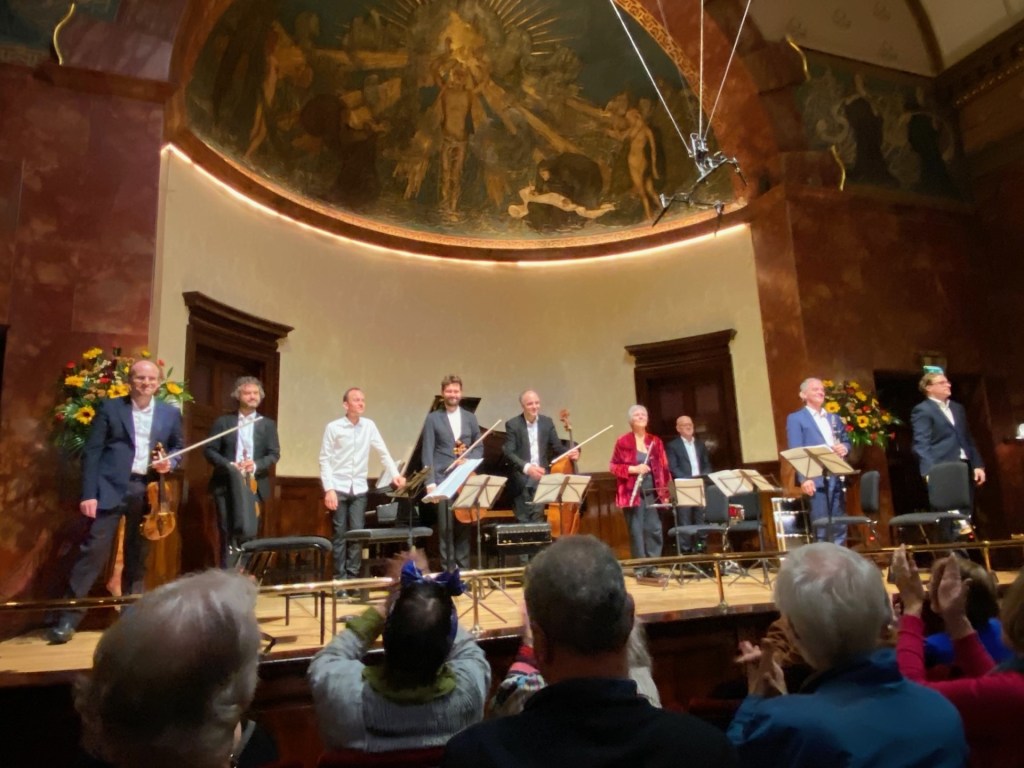
Chamber works from all these composers were performed at Wigmore on Saturday, beautifully by the Nash Ensemble, all live streamed and all available to see on the Wigmore Hall website. Please, do go there: https://www.wigmore-hall.org.uk/video-library
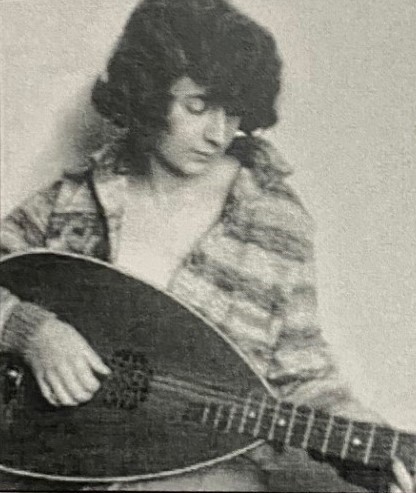
The heart breaking moment, as I have said before of such events, was Ilse Weber’s ‘Lullaby’, sung exquisitely by baritone Konstantin Krimmel (though personally I felt a woman’s voice would be more appropriate). Weber, an accomplished poet, songwriter and writer was sent to Terezin in 1942, and murdered in Auschwitz two years later.
Her eldest son, Hanus, was one of the children rescued from the Nazis by Nicholas Winton and survived the holocaust. Her youngest, Tommy, went with her to Terezin.
There she worked as a nurse with Jewish children until October 1944, when she was one of the last prisoners sent to Auschwitz. It was the end of the war: the nazis knew it and accelerated the pace of transports taking Czech Jews to the death camp. The composers and musicians of Terezin were on one of the very last trains, and none survived.
Ilse Weber wasn’t assigned to go – but the children she was looking after were, as were her husband Willi and her son Tommy, and she insisted on accompanying them.
One of the songs she composed in Terezin was simply called ‘Lullaby’ and Willi, who survived Auschwitz, revealed later that, when she and Tommy were ordered one way and he the other at the Auschwitz ‘selection’, she was singing it to Tommy as they were led away to the gas chamber.
All of which reminds us, if reminder is needed, is that this is why we are anti-fascists.
You can see The Music Of Terezin here: https://holocaustmusic.ort.org/…/the-music-of-terezin

 andy bell
Leave a comment