
As Western powers once again agitate for regime change in Iran, it is worth recalling that they have been here before. In 1953, Britain and the United States destroyed Iran’s only genuine experiment in parliamentary democracy, installing a brutal dictatorship whose violent unravelling in 1979 set the conditions for everything that followed. The architect of the British operation was no idealistic freedom-promoter but a hardline intelligence officer who, back home, went on to cultivate the extreme racist right and plot the overthrow of Britain’s own elected government.
That man was George Kennedy Young – known as GK Young – who at the time of the coup was head of MI6 operations in the Middle East. A former left-winger and journalist in his youth, he had moved sharply to the right, reportedly under the influence of his wife Geryke, a virulent racist and antisemite whom he married in 1939.
Young joined SIS during the Second World War and, after a period as head of station in Vienna, was put in charge of Middle East operations in 1951.
In that capacity he directed the British contribution to the 1953 coup, jointly carried out by the UK, where it was codenamed Operation Boot, and the US, where it was known as Operation Ajax.
The Iranian Prime Minister Mohammed Mosaddegh had sought to audit the Anglo-Iranian Oil Company (AIOC, now part of BP) to verify that Iran was receiving all the oil royalties it was owed, and to reduce the company’s grip over Iran’s oil reserves.
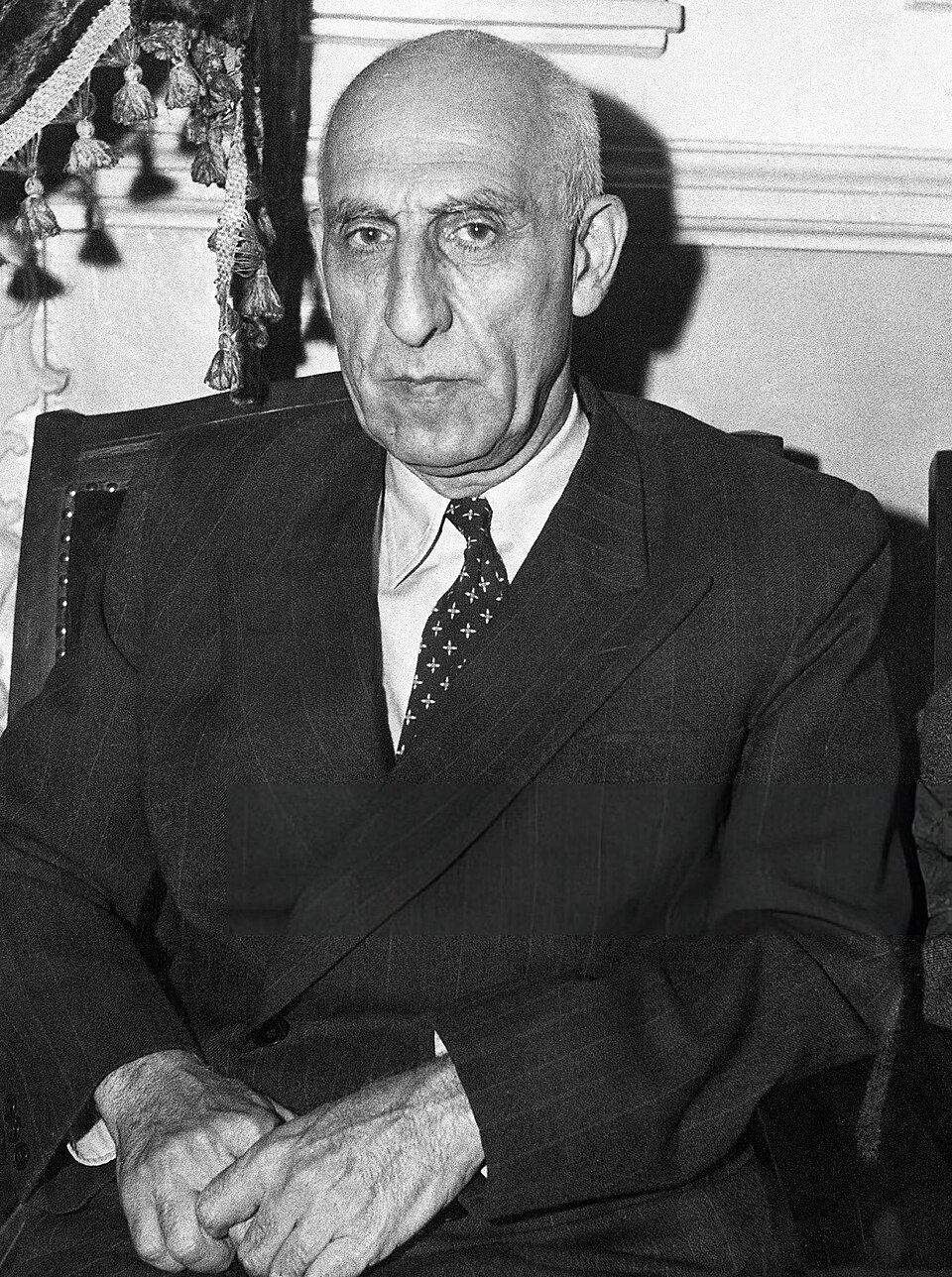
When AIOC refused to submit to an audit, the Iranian parliament voted to nationalise the country’s oil industry. Britain and the United States were unwilling to let that stand.
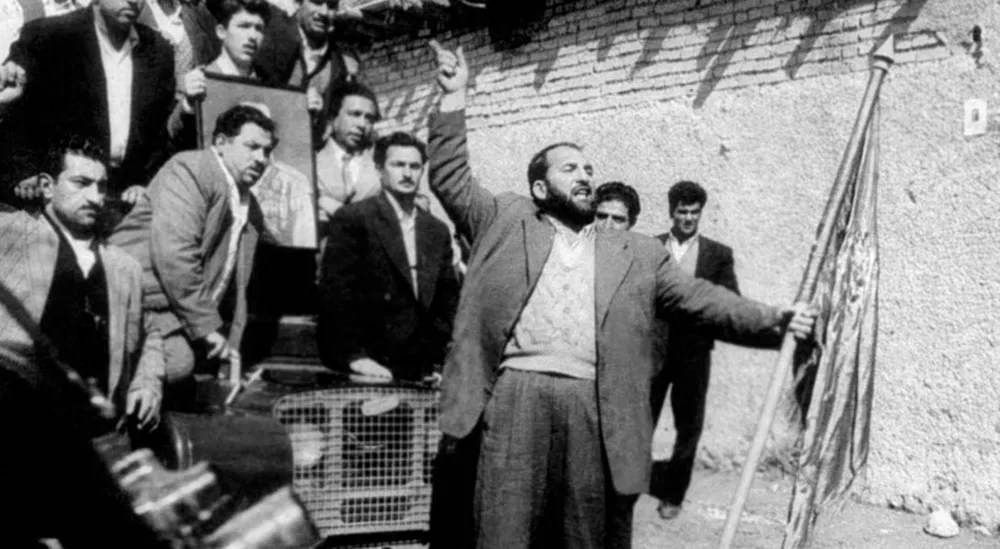
To protect the interests of their oil companies, they engineered a coup d’état that overthrew the Mosaddegh government and installed the dictatorship of Shah Mohammad Reza Pahlavi, a regime that would endure for the next 26 years.
Young went on to become Deputy Director of MI6 but resigned in 1961, angered by Harold Macmillan’s decolonisation policies. He then joined Kleinwort Benson, the merchant bank and, more significantly, aligned himself with the racist wing of the Conservative Party, then coalescing around the Monday Club.
The Club’s membership in those early days was mixed, ranging from the relatively liberal Geoffrey Rippon, who went on to hold several senior Cabinet positions, to the unashamedly racist Ronald Bell. Names that would feature prominently included Harvey Proctor, Julian Amery, Gerald Howarth, Neil Hamilton, John Biggs-Davidson, and Harold Soref.
Over time, the Club evolved into a bridge between the Conservative Party and far more unsavoury elements on the extreme right. By the early 1970s a systematic campaign of entryism by members of the National Front was well under way.
Immigration was always central to the Club’s obsessions. In 1969, Young set out a manifesto for repatriation in his Monday Club booklet Who Goes Home? Immigration and Repatriation. He was instrumental in establishing an Immigration Committee within the Club and loudly championed Enoch Powell’s opposition to Commonwealth immigration.
It all came to a head in 1972 when Uganda’s President Idi Amin announced the expulsion of more than 50,000 East African Asians as part of his “Africanisation” policy, giving them just one month to leave.
Conservative Prime Minister Edward Heath, to his credit, accepted that Britain had a moral obligation to accept these refugees from a fellow Commonwealth country, and promptly established the Uganda Resettlement Board to manage the expected arrivals. Around half of those expelled ultimately came to the UK.
GK Young and his far-right Monday Club allies were incandescent. They responded with a full-throated racist roar at a well-attended rally in Westminster Central Hall in September 1972. Ronald Bell, John Biggs-Davidson, and Harold Soref were among the speakers. The theme was “Halt Immigration Now!”, but the demands went further still: they called for Heath’s government to repeal the Race Relations Act and launch an immediate policy of compulsory repatriation of “coloured” immigrants.
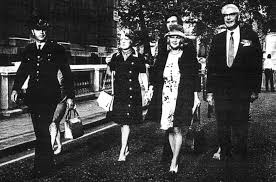
After the rally, a delegation marched to Downing Street with a petition pressing their demands. At its head was GK Young.
Over the following years, the Club was wracked by an internal feud in which GK Young was a central figure. The National Front launched a determined campaign to infiltrate and take it over, one so successful that the NF claimed there was not a single Monday Club branch in the country without NF infiltrators.
In 1973, when Young announced he would challenge Jonathan Guinness for the chairmanship, the NF declared him their preferred candidate. The battle lines were clear: the far right of the Tory party versus the extreme far right and its neo-Nazi allies.
Guinness won, but only after a bitter campaign involving dirty tricks on both sides. His victory prompted a number of resignations, including several MPs.
During the feud, a Searchlight informant, Les Wooler, himself from a military background and well respected within the Club, aided the more moderate faction led by Guinness. Drawing on Searchlight’s files, he helped identify NF infiltrators whom Guinness then expelled.
A booklet, The Monday Club: A Danger to British Democracy, containing much inside information of an allegedly defamatory nautre about activities within the Club, was published anonymously and distributed to all MPs and major media outlets. It has since been widely attributed to Searchlight.
The methods of the 1953 coup represented an approach to politics that Young later sought to import into Britain, to deal with what he regarded as the menace of a communist Prime Minister in the form of Harold Wilson, elected in 1974.
Appalled by Conservative Prime Minister Edward Heath’s economic policies, his ‘surrrender’ to the miners strike in 1972, and his capitulation to Idi Amin over the Ugandan Asians, Young threw himself into far-right domestic political activity. By the mid-1970s he was deeply involved in attempts to set up private armies in the UK which would, if necessary, overthrow Harold Wilson’s Labour government, establish a military dictatorship, and intern “enemies of the state”.
He wrote that:
“…a security counter-action need cover no more than 5,000 persons, including some 40 MPs, not all of them Labour; several hundred journalists and media employees, plus their supporting academics and clerics; the full-time members and main activists of the CPGB and the Socialist Workers Party; and the directing elements of the 30 or 40 bodies affecting concern and compassion for youth, age, civil liberties, social research, and minority grievances.”
1975 saw two separate attempts to establish such private armies: GB 75, set up by SAS founder David Stirling, and UNISON (later renamed Civil Assistance), founded by General Sir Walter Walker. In both cases, those in the know identified Young as the power behind the throne.
George Kennedy Young was as unpleasant a figure as you will find anywhere on the far-right fringe.
Postscript
Britain’s dirty involvement in Iranian affairs did not end when its client the Shah was overthrown in 1979 and replaced by the Islamic Republic. In 1982, a Tehran-based KGB officer named Vladimir Kuzichkin defected to the UK, bringing with him a list of Communist Party members and sympathisers in the Iranian armed forces and civil service. The British duly handed the list to the Ayatollahs, who promptly executed everyone on it.

 andy bell
Leave a comment